
An Adventurer’s Dream Itinerary
If you dream of alpine peaks, emerald lakes, mountain huts, and German-style eats tucked into an Italian getaway, the Dolomites need to be on your bucket list. This breathtaking region of Northern Italy delivers stunning scenery and soul-filling adventures—and just four days is enough to experience some of its greatest hits. From lakeside hikes to rifugio hopping and German beer halls, here’s exactly how we spent four unforgettable days in the Dolomites.
Want to see the trip come to life? Check out our video diary on YouTube for a visual walkthrough of everything we covered; scenic hikes, meals, and memorable moments. It’s the perfect companion to this itinerary!

Day 1: From Milan to Cortina d’Ampezzo
We kicked off this leg of the trip in Milan around 10:00 AM and grabbed our rental car by 11:00, and we were Dolomites bound! With no direct train up to the mountains, renting a car is definitely the most cost-effective (and flexible) way to go. The drive to Cortina d’Ampezzo took about 4.5 hours, winding through the stunning, ever-changing landscapes of northern Italy. Our biggest challenge was figuring out the toll booths. They pop up often, and while they seem intimidating at first, once you get the hang of them, they’re a breeze.
By 5:00 PM, we were itching to move after the long drive, so we laced up our boots for a quick hike to the Cadini di Misurina viewpoint. Sadly, the weather didn’t cooperate with low-hanging clouds and total whiteout, but on a clear day, this spot is famous for jaw-dropping views and an easy, rewarding trail. We checked into B&B HOTEL Passo Tre Croci Cortina around 6:00 PM, and then headed to town for dinner at Hacker Pschorr Haus, a warm, wood-paneled tavern serving up authentic German eats and cold beer.
One fascinating thing to note when visiting the Dolomites is the unique cultural blend that sets this region apart from the rest of Italy. Historically, this area was part of the Austro-Hungarian Empire until after World War I, when it was annexed by Italy. Because of that, many locals still speak German as their first language, and you’ll see everything from street signs to restaurant menus written in both Italian and German. It’s a cultural twist that adds so much charm to the region—you’ll be sipping Italian espresso while hearing German greetings, and ordering schnitzel and strudel alongside pasta and wine. It truly feels like the best of both worlds.


Day 2: Lake Adventures
We started our morning bright and early with breakfast at the hotel at 7:30 AM before heading out on one of the most beautiful hikes of our trip: the trail to Lago di Sorapis. The trailhead is (very conveniently) located right by the hotel, and the hike takes you through some seriously stunning terrain.
If you’re thinking about hiking to Lago di Sorapis, here’s what to expect—it’s an out-and-back trail that starts right off SR48 and clocks in at about 11.6 kilometers (7.2 miles) total. The hike is considered moderate, with a total ascent of 460 meters (around 1,520 feet), starting at an elevation of 1,800 meters (5,900 feet) and climbing to about 1,920 meters (6,300 feet) at the lake itself. Most people complete it in 3 to 5 hours, depending on pace and how long you stop to take in the scenery (and trust us, you’ll want to stop—it’s stunning).
Overall, we found the hike to be pretty manageable, but there are definitely a few “hold-your-breath” moments with slick metal stairs and narrow bridges with just a rope to hold onto. I wouldn’t recommend this for young kids, but to be fair, we saw some little hikers crushing it along the way.
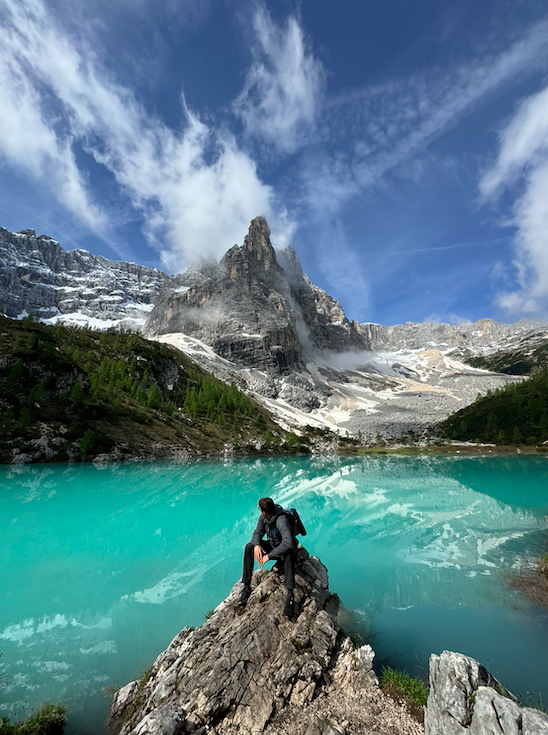
Once you reach the lake… wow. Lago di Sorapis is unlike anything we’ve ever seen. The water is this surreal milky turquoise, so thick with glacial minerals you can’t even see a few inches below the surface. It honestly looks like something from another planet. Fun fact: the lake’s signature color comes from “rock flour”—fine particles from glacial erosion suspended in the water, giving it that foggy blue glow.


After the hike, we were starving, so we made our way to Pizzeria Edelweiss, perched above peaceful Lago di Misurina. Between the crispy pizza crusts, ice-cold beers, and scenic views, it was the perfect post-hike reward.
Next up: Lago di Braies. This iconic lake has a completely different vibe than Sorapis. It’s less electric blue, and more storybook green, but no less magical. As we walked around its emerald shores, we stumbled upon a tiny alpine chapel where a choir was singing. It felt like we had wandered into The Sound of Music. Just when we thought it couldn’t get more idyllic, we spotted a mama duck and her fuzzy ducklings waddling along the shore. Yes, we melted.
By late afternoon, we made our way back to Cortina, taking some time to wander through the town’s charming streets and little shops. For dinner, we switched things up with Janbo, a modern mountain bistro that leans a bit more inventive with its alpine fare. But we couldn’t resist one last stop at Hacker Pschorr Haus for a cozy post-dinner beer. Yes… again. When you find a spot that hits just right, why mess with it?


Day 3: Rifugio Hopping
We kicked off the day with another early breakfast before heading out to the Cinque Torri trailhead. This hike started off pretty steep, winding through a majestic forest with plenty of steps—enough to get you winded. Luckily, by 9:30 AM, we were already cozy at Rifugio Cinque Torri Hütte, sipping hot coffee and warming up with a light soup—easily one of the best starts to a hike we’ve ever had. The staff was incredibly welcoming, and we couldn’t resist grabbing a few postcards as souvenirs. The best part about this spot is the breathtaking view of the Cinque Torri rock formations, which rise dramatically from the landscape and make the effort totally worth it.
One of the most unique and charming aspects of hiking in the Dolomites is the network of rifugi (mountain huts) scattered throughout the region. These cozy alpine lodges are more than just shelters—they’re a full-on cultural experience. Many serve homemade meals, piping hot soups, fresh pastries, and local wine or beer, all with jaw-dropping mountain views. Some rifugi are accessible by car or cable car, while others can only be reached by foot, making them a well-earned reward mid-hike. What’s even better? You can often sleep in them! Many hikers plan multi-day treks, hopping from one rifugio to the next, enjoying hearty meals and warm beds without needing to carry camping gear. Whether you’re just stopping in for a coffee or spending the night, visiting a rifugio is a must-do for a true Dolomites experience.


From there, we continued on foot toward Rifugio Averau (which we planned to hit again for lunch) and pressed on to Rifugio Nuvolau—one of the highest and most scenic rifugios in the Dolomites, perched at 2,574 meters. Rifugio Nuvolau is actually the oldest rifugio in the Dolomites, originally built in 1883!
We unknowingly chose the very first day of the season that Nuvolau was open, something that made the trek extra memorable, but also extra tricky. We highly recommend bringing Trekking poles for this one. We didn’t have them (and were too stubborn to turn back), so we carefully powered through the final push, a little shaken but very determined. The reward? A well-earned beer at the top, served quite literally in the clouds.
On the hike back, we made good on our promise to return to Rifugio Averau for more hearty soup and cold beer, the perfect combo after a challenging climb. Once back at the trailhead, we cruised straight to the hotel for a much-needed afternoon nap.
We wrapped up the day with an early dinner, and yes… we went back to Pizzeria Edelweiss. No regrets. When the pizza’s that good, you absolutely do it twice.
Pro Tip: If twisty mountain roads tend to turn your stomach, be prepared! Motion sickness meds can be a lifesaver—or just grab a Coca-Cola like I did to settle things after the drive.


Day 4: Scenic Stops & Return to Milan
We enjoyed one final breakfast at our hotel before saying goodbye to the Dolomites and beginning the journey back toward Milan. But we weren’t done exploring just yet! Around 11:30 AM, we arrived in Sirmione, a postcard-perfect town perched on a narrow peninsula jutting into the southern end of Lake Garda—Italy’s largest lake. Known for its thermal springs, Roman ruins, and fairytale-like Scaliger Castle, Sirmione makes for the ideal halfway pit stop to break up the drive.
Heads up: Parking in Sirmione is chaotic, to say the least. It took us nearly 45 minutes to find a spot. If we were to do it again, we’d either book a hotel in town with dedicated parking or plan to arrive first thing in the morning before the crowds roll in. Save yourself the stress and plan ahead!
We had lunch at Ristorante Alleria, nestled just steps from the water, where Tanner ordered what ended up being his favorite dish of the entire trip: a creamy pumpkin risotto topped with crispy bacon. (Yes, he’s still talking about it.) With full bellies, we spent the early afternoon strolling along the lakeside promenade, admiring the colorful buildings, swan-dotted shores, and views that stretched for miles across the lake.
After soaking in a few final views and savoring the slower pace, we hit the road around 4:00 PM for our return to Milan. We dropped off our rental car, feeling a little road-weary but incredibly full—of good food, mountain air, and unforgettable memories from our Northern Italy adventure.


🧳 What to Pack for 4 Days in the Dolomites
A curated list for travelers hiking emerald lakes, rifugio hopping, and soaking up alpine beauty with a side of schnitzel.
🎒 Essentials
- Passport + copies
- Driver’s license (needed for rental car!)
- Credit/debit cards (notify your bank before traveling)
- Printed itinerary, hotel & rifugio reservations
- Travel insurance information
- Small daypack or hiking backpack (a must for trails)
- Italian power adaptor (Type C, F, or L plug)
- Sunglasses
- Downloaded Google Maps + offline trail maps (WiFi is spotty!)
- Reusable water bottle (refill at mountain fountains and rifugi)
👟 Clothing
- Hiking Boots!!!
- 2–3 activewear/hiking outfits (quick-dry tops, leggings or hiking pants)
- 1 lightweight but warm layer (fleece or thermal pullover)
- Waterproof jacket or shell (weather changes fast in the mountains!)
- Down or puffer jacket (mornings and evenings can be chilly—even in summer)
- 1–2 casual outfits for dinner in Cortina or Sirmione
- Wool socks (pack a few—your feet will thank you)
- Lightweight gloves + beanie (if you’re headed to high elevations or early starts)
- Sleepwear + undergarments
- Swimsuit (some hotels have saunas or spas, and Sirmione has thermal springs!)
🧼 Toiletries
- Sunscreen(especially important at high altitude)
- Bug spray (a lifesaver for forested trails or lakeside evenings)
- Toothbrush + toothpaste
- Shampoo, conditioner, and body wash (travel-sized or solid bars)
- Lip balm with SPF
- Deodorant
- Razor, hairbrush + ties
- Minimal makeup or grooming items
- Personal medication
- Mini first aid kit (blister pads, Band-Aids, ibuprofen, etc.) *I actually fell on one of these hikes and scraped my hands up so this is a must
- Motion sickness pills/Motion sickness bands (those mountain switchbacks are no joke)
📸 Tech + Travel Gear
- Phone + charger
- Portable power bank (some rifugi don’t have outlets in rooms)
- Camera or GoPro for capturing lake views and cliffside hikes
- SD card + backup storage
- Waterproof dry bag (for electronics or lake visits)
- Trekking poles (super helpful for Nuvolau or steeper terrain)
- Travel towel (for quick wipe-downs or lake dips)
- Packing cubes (to stay organized in small hotel rooms or shared rifugi)
🍂 Just-In-Case Items
- Euros in cash (many mountain huts only accept cash, and ATMs are sparse)
- Compact umbrella or rain poncho
- Snacks for the trail (think protein bars, dried fruit, or local cheese from town)
- Trail map or printed directions (cell service isn’t always reliable)
- Travel journal (for jotting down foggy lake mornings or mountaintop beers)
Final Thoughts
The Dolomites deliver a totally different side of Italy: less wine country and more wild adventure. These few days were filled with hikes, alpine lakes, hearty food, and absolutely jaw-dropping views. Whether you’re here for the photo ops or the trail challenges, this itinerary balances both in the best way.
Planning to visit the Dolomites? Let us know—we’d love to help you tweak this plan or offer suggestions! And if you use our itinerary, tag us on Instagram @takeoffandlanning—we love seeing your adventures in the wild.